

Three Peaks
On the politics of promises
Hello, and welcome back to the BREAK–DOWN’s weekly newsletter. This week we have a terrific new essay for you, written by Noah Gordon, fellow in the Sustainability, Climate, and Geopolitics program at the Carnegie Endowment for International Peace. But first, a reminder.
If you missed it last week, you can listen back to the latest episode of our podcast, in which my colleague Adrienne Buller interviews the political economist Ann Pettifor, and in which Ann has some rather sharp words for usurers and rentiers. That episode is available, as always, in all the usual places—YouTube, Spotify or wherever else you get your podcasts. And if that isn’t enough, then you can also see Adrienne and Ann in conversation at Foyles in London, on the 24th of this month. You can pick up a ticket here (which includes a free glass of wine, apparently. Which is nice).
Now, to the essay, which this weeks looks at the politics of peaks and promises. As Gordon writes, most climate action is about peaks—peaks promised by politicians, who regret they can’t happen yet but are sure they will in the future; peaks assumed to have taken place in the past; and peaks suggested by the data. Each of these has implicit within a particular politics, a distinct vision, often as not hidden behind the data. But more important still is a deeper set of questions: who, and what, do these peaks ultimately serve?
Three Peaks
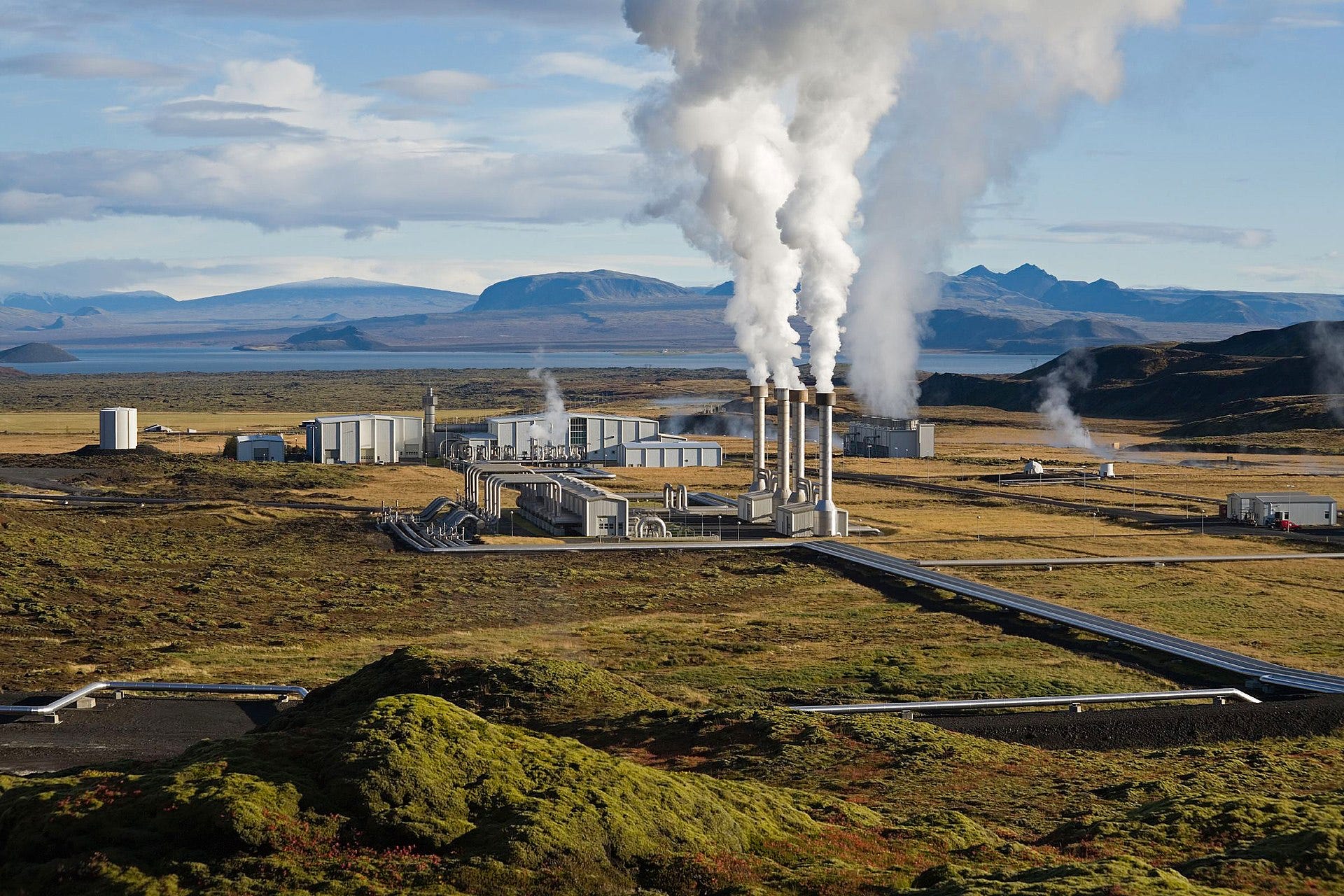
Most climate action is about promises. The United Nations Framework Convention on Climate Change (UNFCCC) states that if global warming is to be limited to 1.5C, greenhouse gas emissions should have peaked by the end of 2024. They didn’t. But on a global level—the only level that matters to the atmosphere—that peak does now appear to be in sight. The “Stated Policies Scenario” in the International Energy Agency’s (IEA) 2025 World Energy Outlook report, which “reflects the prevailing direction of travel” for the energy system,1 states that CO2 emissions will peak “in the next few years”. The folks at BP—the fossil-fuel firm once known as Beyond Petroleum, newly refocused on gas, oil and value for shareholders—agree: their 2024 Energy Outlook expects peak carbon emissions in the mid-2020s.
If that peak is close, there is still some bad news: even after three decades of climate diplomacy, globally humans haven’t even begun to reduce annual CO2 emissions. What, then, is the fate of the 1.5C temperature target? Should its death be officially declared?
If it is dead, this is not primarily because that peak is coming too late. Rather, it is because beyond the summit looms a giant plateau. To keep within the 1.5C, target emissions must not only peak before 2025—they must then decline by 43 per cent by 2030. By contrast, in that same time period, the IEA expects CO2 emissions to decline by 35 per cent, even in the unlikely scenario that global governments exceed their current policies and stick to their “announced pledges”.
The most important of those pledges is China’s: in 2020 President Xi announced that the country would aim to have emissions peak before 2030, en route to “carbon neutrality before 2060”. China may already have achieved this. Its emissions fell by 1 per cent between the starts of 2024 and 2025,2 and may be entering structural decline thanks to the massive expansion of renewable power and electric transport. Other major emitters are less specific. In 2021 India’s environment secretary Rameshwar Prasad Gupta elaborated on Prime Minister Modi’s pledge to reach net-zero carbon by 2070, adding that he foresaw an emissions peak sometime between 2040 and 2045.
Each of these promised peaks contains within it hidden assumptions. Emissions can peak later, for instance, so long as they then fall faster; however, a faster fall entails quicker and greater capital destruction: a 2022 study in Nature calculated that climate policy could plausibly prevent the realization of $1 trillion in profits from upstream oil and gas assets, a figure that didn’t include potential losses in the coal sector or among manufacturers of fossil-fueled machines. It might be possible to protect more of those assets—to burn more of the carbon that already appears on balance sheets—if humans removed an equivalent amount of carbon from the atmosphere.
But humans have already played that card, at least mentally if not in practice. Most scenarios for keeping warming below 2 degrees demand that at least 4 billion tonnes of CO2 per year is removed from the atmosphere each year by 2050, while 1.5 would require more like 7-9 billion tonnes per year. To put this figure in context, current annual emissions sit around 41 billion tonnes. 4 billion is about twice as much as current removals, virtually all of which comes from conventional methods like planting trees where there is limited room for growth. To achieve this extra removal, climate modellers are counting on novel methods of carbon dioxide removal (CDR), such as the deployment of machines to grab carbon out of the air, to grow astronomically from the current level of 1.3 million tonnes a year, of which only half is stored effectively permanently. This sort of growth would be easier to envision if, as is the case for manufacturing solar panels or batteries, carbon removal made any profits for anyone—if markets naturally assigned it exchange value.
Since so many promised peaks come too late, they tend to rely on “overshoot” to hit the mark: the idea that emissions will temporarily exceed the level required for a given level of warming before negative emissions technologies drag levels back down. The “ideology” of overshoot3 was laid bare in October 2025 during IPCC chair Jim Skea’s keynote at an overshoot conference in Laxenburg, Austria, which he opened with a spin on the prayer of St. Augustine: “Lord, limit warming to 1.5C over pre-industrial levels,” he said. “But not yet”.
Overshoot ideology faces both a risk related to politics and a problem related to physics. The risk is that carbon removal does not grow as hoped and these scenarios instead provide cover for the continued expansion of fossil fuels. The problem is that carbon removal does not function as a time machine. Once a tipping point is crossed—say, a polar ice sheet begins to melt, or the Amazon rainforest starts becoming a Savannah, or the Atlantic meridional overturning circulation current, that keeps Europe mild and the Western tropics somewhat below boiling, begins to fade away—removing carbon from the atmosphere does not return the system in question to its previous state. Instead, it settles into a new equilibrium. The damage is irreversible.
Peaks Assumed
Those peaks—peaks promised by politicians, who regret they can’t happen yet but are sure they will in the future—are only the first of three types of peaks through which we can understand the energy transition. The second type are the peaks assumed to have taken place in the past, while the third are peaks suggested by the data. Each has lessons for policymakers and activists who desire decarbonization.
For the second type, peaks assumed, we need to keep in mind an inconvenient truth about energy transitions: humans have never really done one before. More specifically, on a global scale, humans have failed so far to reduce the consumption of any major fuel source.
While 2024 brought a record for global consumption of both gas, the modern fossil fuel of choice, and oil, the backbone of the world’s transportation system and a crucial industrial feedstock, it also saw the burning of more coal than ever before, three years after UK climate diplomats tried to “consign coal to history” at COP26 in Glasgow and about three hundred years after Thomas Newcomen built the first steam engine pump to drain Britain’s coal mines of water. Nor has there been a global transition away from that oldest of fuels, wood. Woodfuel production is today around a third higher than in 1961, and still growing.
This stark fact—that previous supposed global transitions were actually energy additions—is central to the work of French historian Jean-Baptiste Fressoz. As he notes in his 2024 book, More and More and More, the early fossil fuel economy consumed vast forests. Wood was required to prop open coal mines, to supplement coal as a fuel for steam engines in trains, and, as charcoal, to provide an alternative fuel for ironmaking. The rise of oil, in turn, increased demand for cars that could burn it, which were made with steel, and thus coal, which in turn demanded the construction of roads made of cement, and thus, also, coal. The language of “energy addition” has recently moved from the academy into the speeches of fossil fuel champions, with US Energy Secretary Chris Wright contraposing his administration’s addition with the assumed “subtraction” of his Democratic predecessors.
What Fressoz’s work demonstrates is that systems that support burning different fuels are symbiotic and intertwined. A new technology can therefore stimulate innovation in its competitor and at the same time make the incumbent cheaper as demand falls, leading to a rebound in consumption.
This flimsiness of previous “transitions” in part animates the growing interest in “degrowth”. As Fressoz argues, in the face of this relentless quest for more and more, humans must consider “degrowth, rationing, and reducing material consumption.” Degrowth is defined by Jason Hickel, one of its advocates, as “a planned reduction of energy and resource use designed to bring the economy back into balance with the living world in a way that reduces inequality and improves human well-being,” with the degrowth movement in general believing that “absolute decoupling of GDP from resource use is not possible on a global scale”, hence the need to produce less stuff if humans are to achieve a true transition. Degrowthers therefpre hold little hope that regional peaks—like EU CO2 emissions, which came in 1990—can become global ones, or that peaks in flows—like global sales of combustion engine cars, 2018, can become peaks in stocks.
Others read the implications of this history in different ways. The authors of a 2025 Foreign Affairs piece, the energy historian, Daniel Yergin, CEO of asset manager Lazard, Peter Orszag, and S&P Global Chief Energy Strategist, Atul Arya, for instance, correctly note that there is no single global energy transition. Rather, they write, there are myriad different trends “unfolding differently in different parts of the world, at different rates, with different mixes of fuels and technologies, subject to competing priorities and shaped by governments and companies establishing their own paths.” But the conclusions they draw from this are disquieting in their timidity. Why, for instance, is it impossible, as they claim, to advocate that the world’s, or even its wealthiest countries, spend the required “five percent a year of global GDP between now and 2050” on climate action, the same percentage NATO countries have committed to spend on defence? And why too must we accept significant “trade-offs”, such as the claim that any future transition must “unfold over a long period and that continuing investment in conventional energy will be a necessary part” of it? In fact, the essay brings to mind a quote from Andreas Malm and Wim Carton, authors of the 2025 book The Long Heat, who savage lethargic policymakers for whom “conservatism or fatalism about society flips into extreme adventurism about nature”. It is fatalism dressed up as pragmatism.
Read the rest of the essay on the BREAK–DOWN website.